
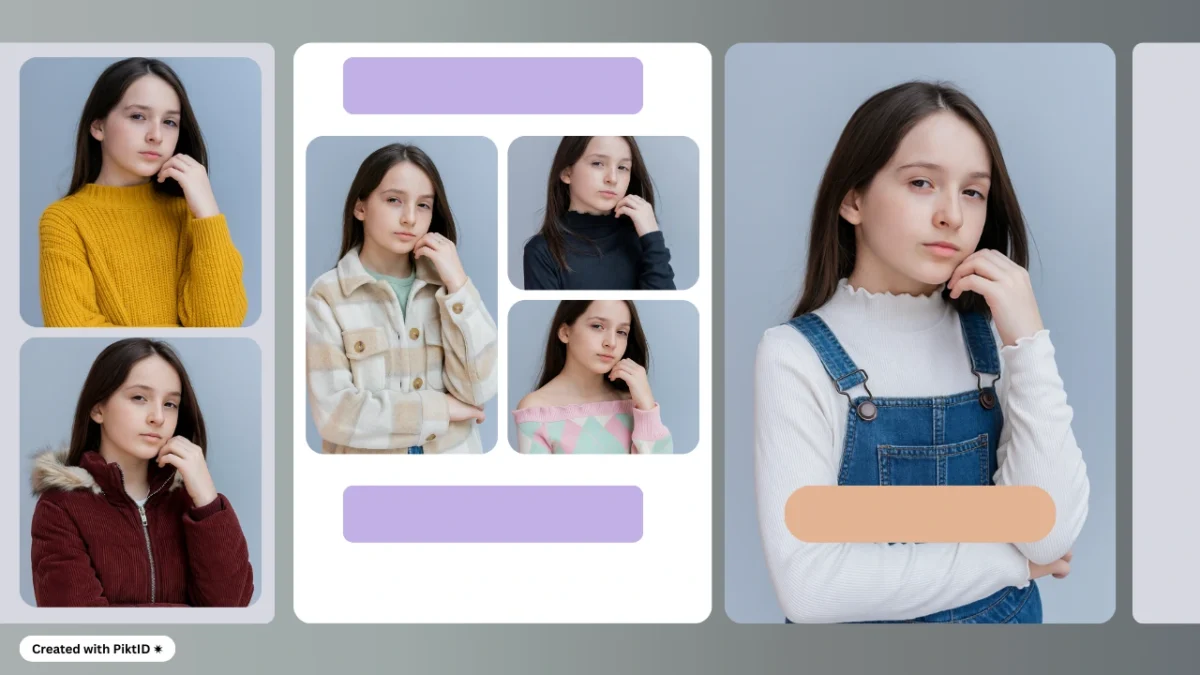
1. Latest Advancements in the Fashion Industry
The growing influence of AI in fashion industry practices is reshaping how designers, retailers, and consumers interact with style. While artificial intelligence has been applied in sectors like healthcare and finance, fashion has quickly become one of its most innovative adopters. Today, fashion isn’t just about fabrics and tailoring—it is about blending creativity with data, algorithms, and immersive technology.
From automating design sketches to creating hyper-realistic virtual try-ons, AI is unlocking opportunities that were once limited to large fashion houses. Platforms like PiktID Studio make these technologies accessible, allowing designers, brands, and even individual users to experiment with digital outfits, generate models, and test concepts virtually before committing to production.
AI is no longer a supporting tool; it is becoming a central driver of efficiency, personalization, and sustainability in modern fashion workflows.
2. The Role of AI in the Fashion Industry
The role of AI in fashion industry operations spans across the entire value chain, from concept to consumer. Here are the key areas where AI is driving measurable impact:

a. Design & Creativity
- AI can generate unique clothing patterns, innovative fabric textures, and novel silhouettes.
- Designers use AI as a creative partner, rapidly prototyping ideas that blend market data with artistic intuition.
b. Trend Prediction
- Machine learning analyzes social media feeds, influencer content, runway shows, and search behavior.
- Brands can anticipate demand and align product launches with upcoming fashion cycles.

c. Personalization & Virtual Try-On
- Virtual fitting rooms and try-on solutions allow customers to visualize outfits on their own bodies.
- This improves confidence in online purchases, reduces return rates, and enhances the shopping experience.
d. Sustainability & Efficiency
- AI-driven simulations help test designs digitally, cutting down on fabric waste and excess inventory.
- Brands can experiment with multiple variations before creating physical samples, reducing environmental impact.
Together, these advancements highlight why AI in fashion industry workflows are not just a passing trend but a fundamental transformation that benefits designers, businesses, and consumers alike.
3. AI-Powered Fashion Photography & Editing
AI in fashion industry is rapidly shifting how imagery is created and edited—moving weight from costly, time consuming photo shoots to intelligent, studio quality digital work flows. Traditional shoots still deliver authenticity, but they are expensive, slow, and brittle when brands need many variants (colorways, locales, model types). AI-enabled pipelines close that gap by producing photo real output that requires far less reshoot overhead.

How AI improves fashion photography and editing
- Virtual wardrobe swaps: Replace or update garments on an existing model while preserving pose, lighting, and shadows. This lets teams test colorways or seasonal updates without rebooking talent.
- Texture- and lighting-aware synthesis: Modern models preserve fabric properties (sheen, drape, pleats) and mirror scene lighting so garments look natural in- ontext.
- Rapid variant generation: Produce multiple outfit / color combinations, angles, and crops in minutes—ideal for A/B testing and catalog localization.
- Automated retouching at scale: Remove blemishes, fix stray hairs, and harmonize skin tones using models trained on fashion specific datasets to maintain editorial standards.
Benefits by use case
- E-commerce: Faster time to market for new SKUs, lower return rates through better product visualization, and richer product pages with multiple on model variations.
- Magazines & editorials: Create concept imagery or supplement limited shoot assets with stylized AI variants for layout flexibility.
- Marketing & social: Rapid creation of campaign banners, thumbnails, and paid-ad creatives with consistent brand aesthetics.
In short, AI in the fashion industry enables teams to move from a single shot mindset to a scalable, iterative creative process — delivering more visuals, faster, with lower cost and consistent quality.
4. How PiktID Studio Brings AI into Fashion
AI in fashion industry workflows need tools that are precise, controllable, and production ready. PiktID Studio bundles that capability into a single creative suite: identity aware swaps, image generation, targeted editing, and background / styling controls that let teams update fashion imagery without a full reshoot.

Core capabilities relevant to fashion
- Virtual Clothing Updates (Swap): Replace outfits on an existing model while maintaining lighting, perspective, and body pose—perfect for refreshing product shots or seasonal restyles. (Tool: PiktID’s Swap)
- AI Models for E-commerce (Generate Person): Produce on-brand models with specific demographics and poses to scale catalogs and regionalize visuals. (Tool: https://studio.piktid.com/generate-person)
- Full Image Creation (Create Image): Generate end to end hero images or lookbook frames in any style or colorway—useful for concept shoots and campaign experimentation. (Tool: https://studio.piktid.com/create-image)
- Expression & Gaze Controls (Change Expressions / EraseID): Optimize model engagement (eye contact, subtle smiles) for thumbnails, hero banners, and social ads.
Key fashion use cases
- No-Reshoot Campaign Updates: Replace garments or colors across dozens of assets after a late creative change.
- Lookbook & Catalog Scaling: Generate model variations for each SKU—different sizes, skin tones, and regional styles—without coordinating multiple shoots.
- Trend Testing: Rapidly prototype trend colors and specialty fabrics in-context, then translate winning variants to production.
Example quick workflow
- Upload a base image.
- Use Swap to change the outfit or Create Image to generate new scene concepts.
- Fine-tune with mask based edits and expression controls.
- Download campaign ready assets.
Try PiktID Studio to experiment with these work flows: https://studio.piktid.com/ — it’s designed to help fashion teams apply AI in fashion industry projects at scale while preserving creative control and image quality.
5. Benefits of Using AI in Fashion Visuals

- Upload a base image.
- Use Swap to change the outfit or Create Image to generate new scene concepts.
- Fine-tune with mask based edits and expression controls.
- Download campaign ready assets.
Try PiktID Studio to experiment with these work flows: https://studio.piktid.com/ — it’s designed to help fashion teams apply AI in fashion industry projects at scale while preserving creative control and image quality.
Example quick workflow
Adopting AI in fashion industry work flows for visual production delivers immediate, measurable benefits across cost, speed, creativity, and global representation. These advantages compound when teams pair generation tools with identity preserving edit flows such as PiktID’s Create Image and Swap features.
Key benefits:
a. Cost reduction
- Eliminate many line items associated with traditional shoots (studio rental, travel, casting, hair & makeup, and re-shoots).
- Reduce post production time and agency fees by generating publish ready assets directly from the platform.
b. Speed to market
- Produce campaign ready visuals in minutes rather than days.
- Iterate on concepts rapidly (multiple colorways, fits, and accessories) to meet seasonal deadlines or viral trends.
c. Creative scale and flexibility
- Test dozens of stylistic directions in one session—mix silhouettes, fabrics, and colorways without physical samples.
- Combine automated prompts with manual refinements to tune look and feel precisely.

d. Diverse, on brand representation
- Generate models across a range of ages, ethnicities, and body types to localize campaigns and broaden market appeal.
- Maintain brand consistency by reusing seeds and trait presets to replicate a model’s look across multiple assets.
e. Risk reduction
- Replace costly re-shoots with controlled, repeatable edits; maintain quality while reducing operational overhead.
- Use digital previews to validate creative directions with stakeholders before committing to production.
Together, these benefits illustrate why AI in fashion industry visuals is rapidly shifting from experimental to core production practice for forward looking brands.
6. Real-World Applications of AI Fashion Tools
AI-driven visual tools are already embedded across commercial workflows in the AI in fashion industry, enabling new capabilities at each stage of the customer and creative funnel. Below are practical applications where brands and creators see the most value.
Primary applications:

a. E-commerce platforms
- Offer virtual try-on galleries and on model product swatches so customers can preview outfits in multiple colorways and fits.
- Reduce returns by helping shoppers choose the right style and color for their body and lighting conditions.
b. Seasonal catalog and look book production
- Update catalog images for new seasons without re-shooting entire collections.
- Generate consistent hero images and localized variants for different markets quickly.
c. Influencers, stylists, and creative agencies
- Prototype editorial concepts, mock up campaign creatives, and test outfit pairings on synthetic models before live shoots.
- Speed client approvals with polished previews that reflect the intended final photography.

d. Marketing and ad creative
- Produce A/B test assets with different styling cues (color, texture, accessories) to optimize CTR and conversion.
- Localize ad creatives by swapping models and outfits to match regional preferences.
e. Print and online editorial
- Create high fashion covers, spreads, and digital editorials with customized looks that would otherwise require expensive production logistics.
- Rapidly explore avant-garde or trend-led concepts without building physical samples.
f. Supply chain & sustainability
Simulate production variants and test customer demand digitally, minimizing waste from unnecessary samples and overproduction.
These real world applications show how AI in fashion industry tooling is not just augmenting current workflows but enabling entirely new business models—faster, cheaper, and more inclusive creative pipelines that scale for global commerce.
7. The Future of AI in the Fashion Industry

AI in fashion industry workflows will shift from a supporting tool to an active creative partner — a co-designer that augments human imagination with data backed suggestions, rapid prototyping, and automated production ready assets. Rather than replacing designers, this partnership will accelerate ideation: AI proposes patterns, palettes, and fits; humans curate and refine. Expect this collaboration to produce more seasonal drops, micro collections, and highly localized assortments at lower cost and shorter lead times.
Key directions to watch:
- Real-time virtual dressing rooms: browser and mobile experiences that let shoppers try multiple outfits with photo realistic drape and accurate color under the same scene lighting.
- Hyper-personalization at scale: recommendations that account for body shape, skin tone, and past behavior to serve outfit suggestions that convert.
- Physics-aware garment generation: AI that models real fabric behaviors (folds, stretch, reflectance) so virtual garments look and move like the real thing.
- Democratization of fashion: independent designers and small brands will use tools (like PiktID Studio) to produce professional lookbooks and ads without a studio budget.
- Sustainability gains: virtual sampling and rapid A/B testing reduce reliance on physical prototypes and lower waste.
Practical next steps for brands:
- Pilot AI-augmented creative sprints to compress concept to shelf cycles.
- Build a prompt and seed library to maintain consistent brand aesthetics.
- Integrate generated assets into A/B tests to quantify uplift before committing to production.
These trends show that AI in fashion industry is not a novelty but a structural change — one that will redefine speed, cost, and creative possibility across design, marketing, and commerce.
8. Step-by-Step: How to Try Fashion Changes with PiktID Studio

Using PiktID Studio is a practical way to experience how PiktID accelerates styling and campaign production. Below is a detailed, practical workflow for trying fashion changes on a subject—either from an uploaded photo or by generating a new image from scratch.
1. Access PiktID Studio
Open the Create Image page (https://studio.piktid.com/create-image) or the Swap tool if you’re working from an existing scene.
2. Upload or set your canvas
- Upload a high resolution photo (1024 × 1024 or higher recommended) for best detail, or start with a blank canvas for full creative control.
- If using a photo, select the subject and confirm face / pose detection.
3. Write a precise prompt
- Use this structure: subject + outfit + fabric / fit + color + setting + camera cue.
- Example: “Full-body portrait of a woman in a tailored camel trench coat over a silk navy slip dress, softbox lighting, photo realistic.”
- For swap work flows, specify lighting and skin tone alignment to help the generated model blend naturally.
4. Edit model settings (optional)
Click Advanced to adjust Conditioning, Diversity, and Guidance. Lower conditioning for subtle edits; increase diversity for creative exploration. Lock a seed to reproduce consistent variants.
5. Generate and shortlist
Click Generate to produce multiple candidates. Review the History tab, shortlist 2–4 strong images, and note seeds / prompts for reproducibility.
6. Refine for realism
Tweak prompts to adjust fit, hem length, or fabric texture. Use negative cues (e.g., “no visible artifacts, no extra limbs”) to reduce errors.
7. Finalize and export
Upscale the chosen image if needed, apply minor color grading to match brand palette, and download web optimized and high res versions for print or catalog use.
8. Scale & integrate
For catalogs or campaigns, save prompt / seed metadata, batch generate colorways, and automate delivery to your CDN or CMS via API.
Tips for best results:
- Match lighting terms in prompts to the photo’s existing light source.
- Use close, specific fabric descriptors to improve drape realism.
- Save and version prompts so you can reproduce consistent looks across collections.
This work flow demonstrates how PiktID Studio brings practical, repeatable AI capabilities into fashion production — enabling teams to iterate faster, reduce costs, and experiment with trends confidently.
9. Getting Started with PiktID Studio

AI in fashion industry work flows is no longer experimental — it is a practical advantage that touches design, production, marketing, and post production. By combining data driven trend signals with high fidelity image synthesis, brands can iterate faster, reduce waste, and produce higher performing visual content at scale.
PiktID Studio is a game changer in this shift. Its toolkit — from Generate Person and Create Image to Change Expressions, Swap, and Anonymize — makes it possible to create campaign ready lookbook images, standardized product shots, and engaging social assets without repeated photo shoots. Benefits include:
- Faster creative cycles: generate and iterate multiple concepts in hours, not weeks.
- Cost efficiency: lower production budgets by reducing reshoots and studio time.
- Creative flexibility: test trend forward colorways, poses, and compositions on demand.
- Consistency and scale: reproduce identical model traits and seeds across an entire catalog or campaign.
For teams that care about speed, quality, and measurable lift in engagement, these tools translate directly into better marketing outcomes and lower operational friction. Ready to modernize your fashion visuals? Try PiktID Studio today, explore the feature set, and start with 10 free credits to test Create Image and Generate Person: PiktID Studio.
Key Takeaways
- AI in fashion industry is transforming design, marketing, and production processes by integrating creativity with data and algorithms.
- It drives efficiency by automating design tasks, predicting trends, and personalizing customer experiences through virtual try-ons.
- PiktID Studio enhances production workflows, allowing teams to generate and edit fashion imagery without the need for expensive photo shoots.
- AI enables brands to reduce costs, speed up time-to-market, and maintain brand consistency with diverse representation.
- The future of AI in fashion involves hyper-personalization, real-time virtual environments, and sustainable practices to minimize waste.
10. FAQs on AI in Fashion Industry
Q1: How is AI changing fashion design?
AI helps designers prototype patterns, simulate fabric behavior, and explore unexpected combinations quickly. Generative models produce multiple design variations from a single brief, enabling rapid concept validation and reducing the number of physical samples required.
Q2: Can AI replace fashion models?
AI creates high quality synthetic models that are ideal for look books, catalog variants, and campaign tests. However, it complements rather than fully replaces human models—real life shoots remain important for fit validation, tactile material cues, and certain high-touch brand experiences.
Q3: Is AI fashion editing suitable for small businesses?
Yes. Cloud-based tools like PiktID Studio remove entry barriers by offering pay as you go credits, simple web workflows, and templates. Small brands can produce professional assets without long vendor contracts or expensive studio rentals.
Q4: Can I use AI to update clothing in my product catalog?
Absolutely. Upload existing product images and use Create Image or Swap workflows to switch garments, test colorways, or create regionalized variants—saving time and cutting the need for repeat photo shoots.
Q5: Does AI in fashion industry support sustainability?
Yes. Digital-first iteration reduces sample waste, lowers the carbon footprint of photoshoots, and enables demand led production planning. By validating styles and colors virtually, brands can produce fewer unsold items and run more efficient supply chains.