
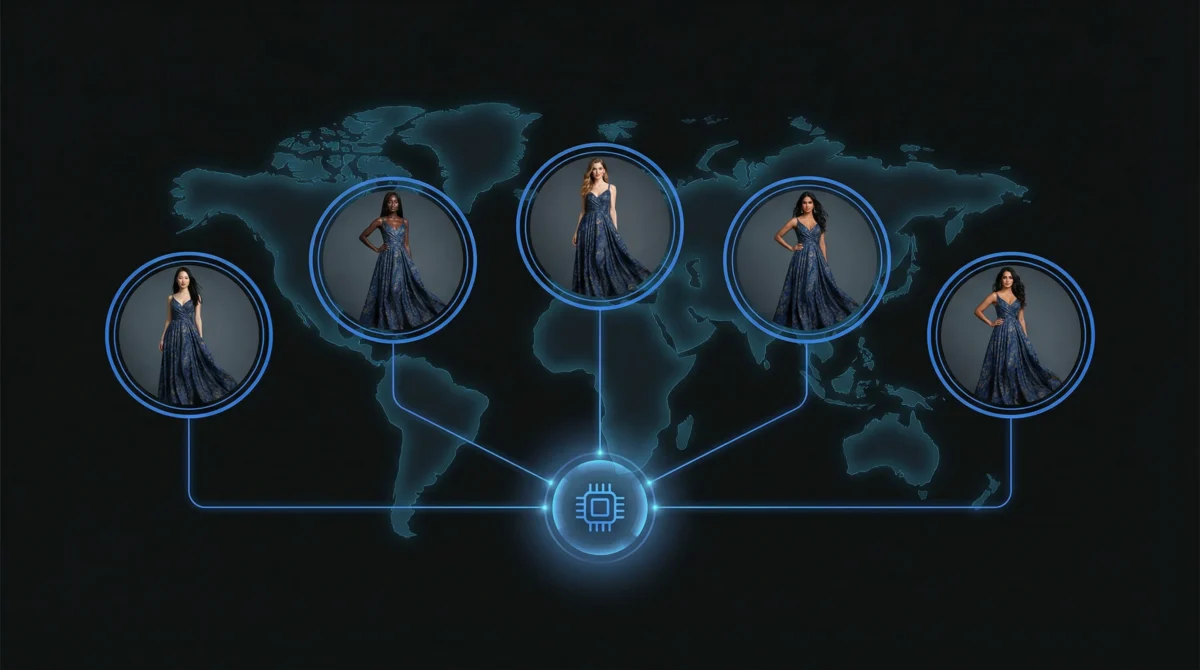
Model swap use cases go far beyond the technical, replacing the person in a product photo while keeping the garment identical enables faster catalog production, broader market reach, inclusive representation, and data-driven conversion optimization.
Here are five concrete use cases where brands are deploying model swap to drive measurable results, each illustrated with real AI-generated examples.
Use Case 1: Market Localization
The challenge: A European fashion retailer expanding into five markets needs product imagery that resonates with local demographics. Traditionally, this means booking five separate photoshoots with five different model rosters — multiplying costs by 5x.
The solution: Shoot once (or generate once), then use model swap to create market-specific versions of every product image.
How It Works
Start with a single set of product photos featuring one model. Use On-Model’s model swap to generate versions with identities matching each target market’s demographics:
Both images show the identical garment — same color, same draping, same brand elements. Only the model has changed, allowing each market to see the product on someone who reflects their local consumer base.
Business Impact
According to a 2025 study by Baymard Institute, product pages showing models that match the shopper’s demographic see 12–18% higher click-through rates in paid advertising and 8–15% higher add-to-cart rates on product pages.
For a retailer with 1,000 SKUs expanding into 3 new markets, the cost comparison:
| Approach | Cost | Time |
|---|---|---|
| Traditional (3 new photoshoots) | $60,000–$120,000 | 6–12 weeks |
| Model swap | $70–$200 | 1–2 days |
Use Case 2: Inclusive Representation
The challenge: Consumers increasingly expect to see themselves represented in product imagery. Brands showing only one body type, ethnicity, or age group lose potential customers. But inclusive photography has historically been prohibitively expensive — every additional model means another booking, another shoot day.
The solution: Model swap lets you show every product on a diverse range of AI identities — different genders, ethnicities, ages, and presentations — without any additional photography costs.
On-Model’s Identity Catalog
On-Model offers 40+ AI identities spanning:
- Gender: Male and female identities
- Ethnicity: Diverse global representation
- Tier: Free, Basic, and Pro quality levels
- Custom: Create proprietary identities unique to your brand
Each identity maintains consistent features across unlimited generations, ensuring your diverse representation is also visually consistent.
Business Impact
A 2026 analysis by McKinsey found that fashion brands with inclusive product imagery saw:
- 25% higher engagement on social media
- 18% lower return rates (shoppers could better evaluate fit on a similar body type)
- Broader audience reach without proportional marketing spend increase
Use Case 3: Brand Identity Consistency
The challenge: When you hire different models across seasons, campaigns, and regions, your visual brand identity fragments. Your spring catalog features Model A, your summer campaign has Model B, your marketplace listings use Model C. Customers lose the visual thread that builds brand recognition.
The solution: Create a custom AI identity — a proprietary virtual model that represents your brand. Use model swap to apply this consistent identity across your entire catalog, every season, every market.
How It Works
- Upload 5–10 reference photos to create your custom identity
- On-Model generates a permanent, reusable identity code
- Apply that identity to any product image via model swap
- Every product, every season, every market — same brand face
Business Impact
Brand consistency across visual touchpoints drives recognition. Brands using consistent model identities across catalogs report:
- Up to 15% improvement in brand recall metrics
- Higher repeat purchase rates from returning customers who recognize the “brand model”
- Simplified creative workflows — no more model casting, availability negotiations, or usage rights management
See our Brand Identity Guide for the complete setup process.
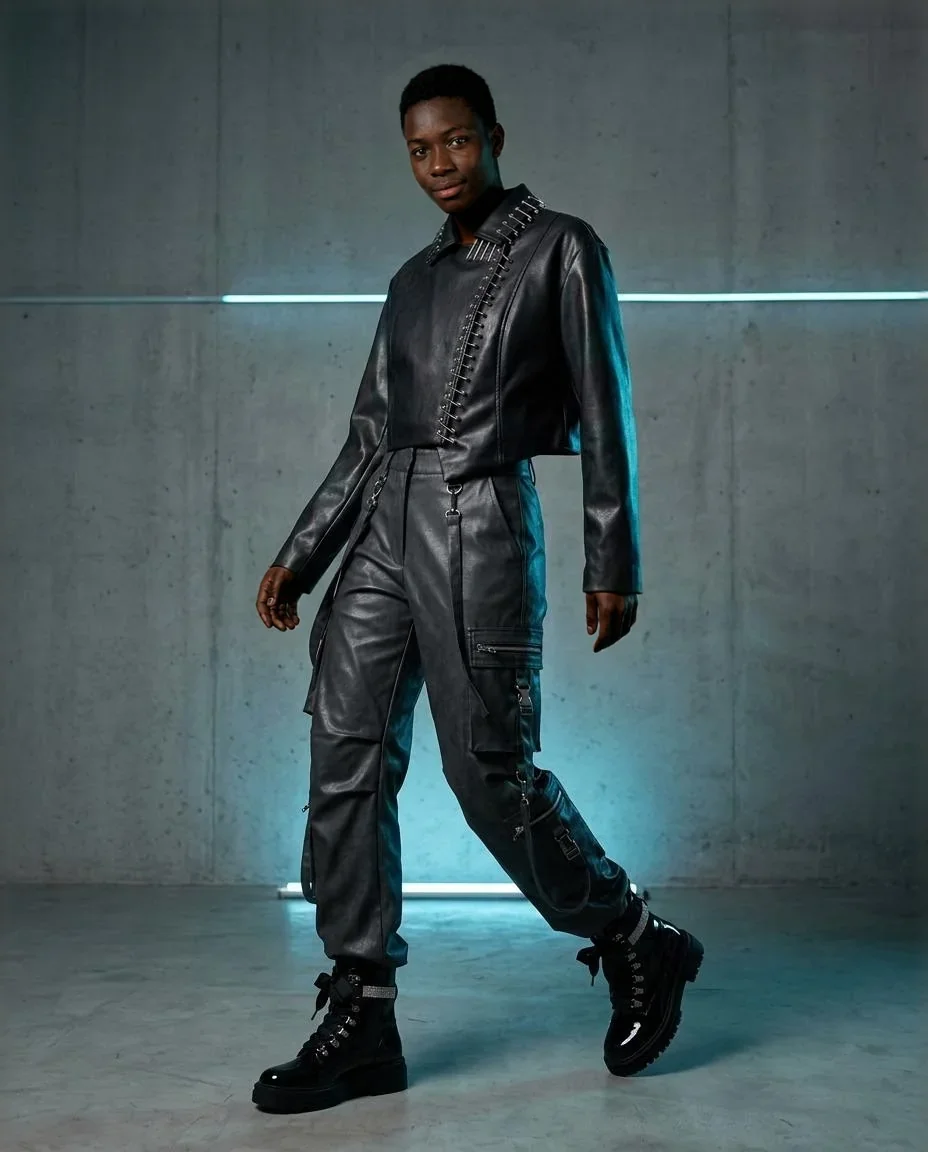
Use Case 4: Seasonal Catalog Refreshes
The challenge: Every season, brands need fresh product imagery. Even if the garments don’t change (basics, carry-over styles), the visual presentation needs to evolve — new backgrounds, new styling cues, new energy.
With traditional photography, refreshing 500 product images means booking another multi-day shoot. Many brands simply don’t refresh, leaving stale imagery online for months.
The solution: Use model swap combined with background generation to refresh your entire catalog without reshooting. Swap to a seasonally appropriate identity, update backgrounds to reflect the season’s mood, and batch-process the entire catalog.
Seasonal Refresh Workflow
| Season | Identity | Background | Mood |
|---|---|---|---|
| Spring | Bright, warm identity | Garden daylight | Fresh, optimistic |
| Summer | Sun-kissed, relaxed | Outdoor/beach | Vibrant, energetic |
| Autumn | Warm-toned, sophisticated | Urban, warm tones | Cozy, layered |
| Winter | Crisp, editorial | Indoor studio, dark | Dramatic, intimate |
Business Impact
Regularly refreshed product imagery signals an active, well-maintained brand. E-commerce platforms use freshness signals in ranking algorithms — updated products rank higher in search results.
For detailed seasonal planning, see our Seasonal Fashion Photography Tips.
Use Case 5: A/B Testing Model Presentations
The challenge: Which model presentation drives higher conversion? You suspect showing products on a model with a relaxed pose converts better than a formal pose — but you’ve never been able to test it because producing two versions of every product image was too expensive.
The solution: Model swap makes A/B testing product imagery trivially cheap. Generate two (or more) versions of the same product with different identities, poses, or presentations, and run controlled experiments.
What You Can Test
| Test Variable | Version A | Version B |
|---|---|---|
| Identity gender | Female model | Male model |
| Identity demographics | Identity matching local market | Global/neutral identity |
| Pose style | Formal, structured | Relaxed, natural |
| Model count | Single model | Same identity, different pose per image |
How to Run the Test
- Generate variations — Use model swap to create 2–3 versions of 50–100 high-traffic products
- Deploy via A/B testing tool — Use your existing Shopify/platform A/B tool or a third-party solution like Optimizely
- Measure metrics — Track conversion rate, add-to-cart rate, time on page, and return rate per variation
- Roll out the winner — Apply the winning model presentation across your entire catalog
Business Impact
E-commerce brands running A/B tests on product imagery typically find 5–15% conversion rate differences between presentations. With AI generation, the cost of creating test variants is near zero, making continuous optimization practical.
The Data on Model Diversity and Conversion
The cumulative evidence across these use cases points to a clear trend: diverse, consistent, frequently refreshed product imagery drives measurable business results.
| Metric | Impact | Source |
|---|---|---|
| On-model vs flat-lay conversion | +20–30% | Shopify Commerce Report 2025 |
| Demographic-matched model imagery | +12–18% CTR | Baymard Institute 2025 |
| Inclusive representation engagement | +25% social engagement | McKinsey 2026 |
| Consistent brand identity | +15% brand recall | McKinsey 2026 |
| Fresh imagery vs stale | Higher organic ranking | Platform algorithm analysis |
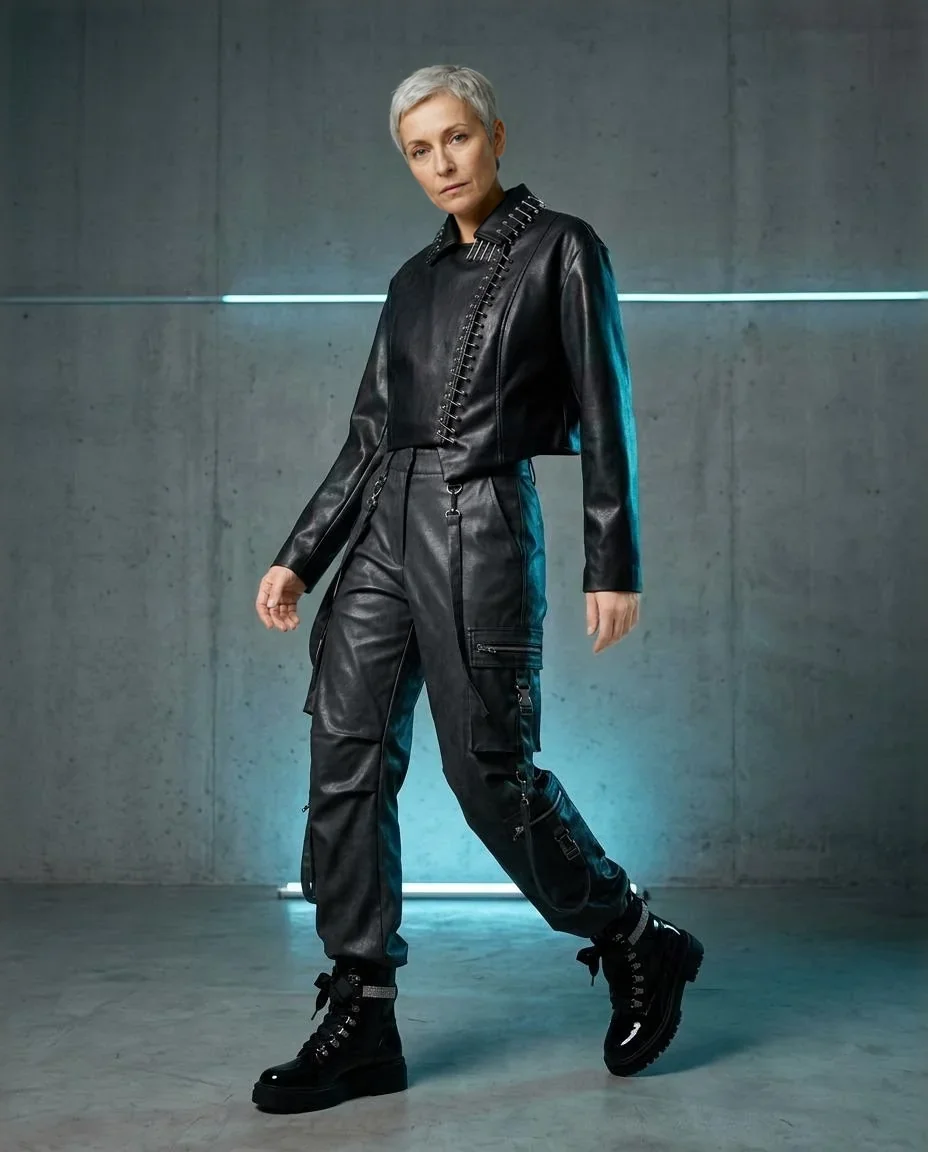
Getting Started with Model Swap Use Cases
- Start free — Sign up at app.on-model.com with 50 credits
- Upload a product photo — Any existing on-model image from your catalog
- Select an identity — Choose from 40+ pre-built options
- Generate and compare — See the swap result alongside your original
- Scale — Once satisfied, batch-process your catalog
For the step-by-step technical walkthrough, see How to Replace Models in Product Photos. For a platform comparison, see Best AI Model Swap Tools 2026. For AI context, see Ghost Mannequin vs On-Model AI.
Sources
- Baymard Institute, “E-Commerce Product Image Research 2025,” accessed March 2026.
- McKinsey & Company, “The State of Fashion Technology 2026 — Diversity and Representation in E-Commerce,” March 2026.
- Shopify, “The Future of Commerce 2025 Report,” accessed March 2026.