
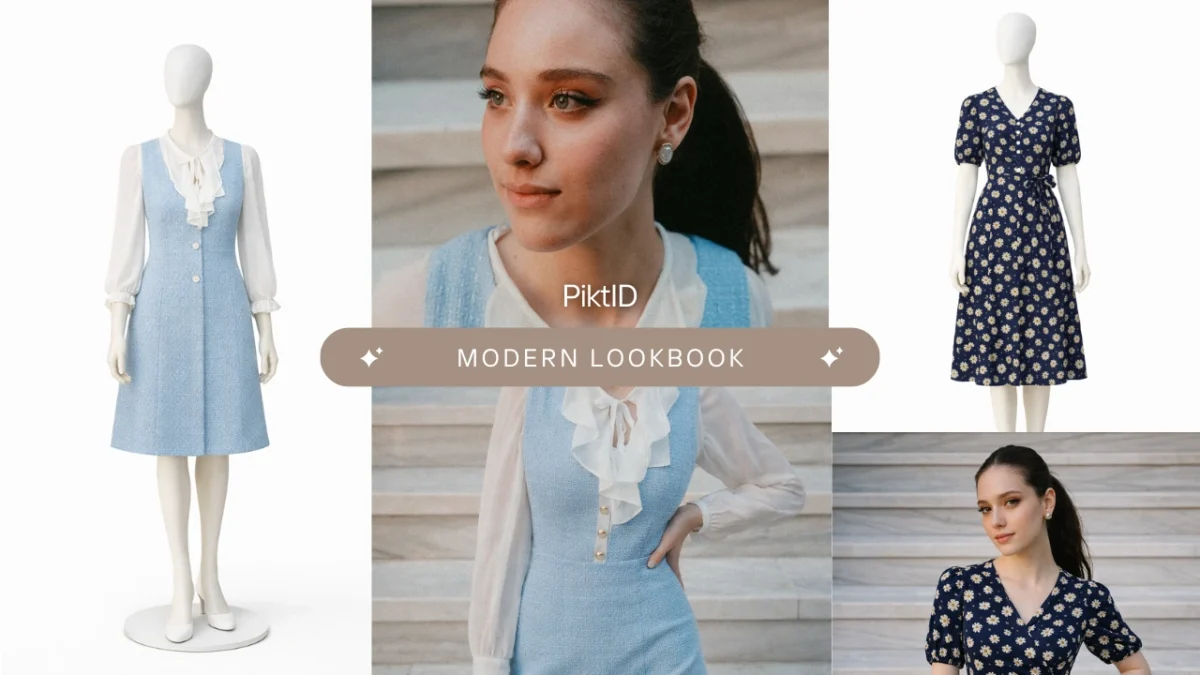
1. Au-delà de la forme plastique
Le concept de Mannequin féminin réaliste est devenu un élément central de la manière dont les marques modernes de mode et de commerce électronique présentent leurs produits en ligne. À mesure que les achats s'orientent de plus en plus vers des expériences numériques, les marques évoluent au-delà de l'aspect statique de la présentation de leurs produits. mannequins en fibre de verre et coûteux séances de pose de mannequins en direct pour répondre aux exigences modernes de rapidité, d'échelle et de cohérence visuelle.
Un mannequin féminin réaliste représente un changement stratégique vers des modèles numériques de type humain alimentés par l'IA. Ces actifs permettent d'obtenir une posture et un comportement réalistes. apparence naturelle de la peau d'un mannequin de mode professionnel tout en restant entièrement contrôlable et réutilisable.
Principaux avantages du commerce électronique pour les entreprises :
- Élimination des coûts de reprise : Plus besoin de réserver des studios coûteux pour chaque mise à jour saisonnière.
- Déploiement rapide : Passez en quelques minutes d'une page produit “à plat” à une page produit “sur modèle”.
- Une identité de marque cohérente : Maintenir une apparence de “modèle unique” pour des milliers d'unités de stock.
- Évolutivité globale : S'adapter sans effort réalisme du mannequin pour des segments d'audience régionaux ou diversifiés.
Pour les marques qui gèrent des catalogues à fort volume, des plateformes telles que PiktID transforment le mannequin féminin réaliste d'une simple aide visuelle en un outil évolutif. Jumeau numérique flux de travail.
2. Qu'est-ce qu'un mannequin féminin réaliste ?

Dans le paysage numérique actuel, un mannequin n'est plus seulement un corps en 3D ou une doublure en plastique. Il s'agit d'un modèle numérique généré par l'IA, conçu pour combler le fossé entre photographie de mannequin fantôme et modèles vivants séances de photos éditoriales.
L'anatomie du réalisme
Pour être classé “haute qualité”, un mannequin numérique doit maîtriser plusieurs couches techniques :
- Micro-Texture Teintes de la peau : Une peau plus vraie que nature qui réagit naturellement à l'éclairage du studio sans l'effet “uncanny valley”.
- Précision anatomique : Des proportions qui reflètent le corps humain réel afin d'aider les acheteurs à visualisation de la taille et de l'ajustement.
- Posture dynamique : Dépasser les positions rigides en “C” ou en “S” pour inclure des poses rédactionnelles prêtes à être prises par l'appareil photo.
- Intégrité du tissu : Garantir la drapé et poids du vêtement sont parfaitement adaptées à la forme numérique.
L'importance du réalisme : Impact sur les taux de conversion
Les mannequins traditionnels peuvent sembler rigides et visuellement déconnectés, ce qui provoque souvent un “rebond” dans l'engagement. À l'inverse, un mannequin féminin s'adapte aux besoins de style du vêtement, créant une forme humaine crédible qui aide les acheteurs à comprendre comment un vêtement leur ira réellement.
Des avantages étayés par des données :
- Augmentation de la confiance visuelle : Le réalisme réduit l'incertitude du consommateur quant à la qualité du tissu.
- Meilleure performance du PDP : Les modèles numériques réalistes sont souvent plus performants que les modèles traditionnels mannequin invisible des prises de vue dans le cadre de tests A/B.
- Retours réduits : L'affichage précis de la coupe et des proportions permet de prendre des décisions d'achat plus éclairées.
3. Pourquoi les marques remplacent-elles les modèles physiques et les mannequins ?

Les marques de mode sont soumises à une pression constante pour produire plus de visuels, plus rapidement et avec une plus grande cohérence. Les méthodes de production traditionnelles basées sur des mannequins physiques et des modèles vivants ne sont plus efficaces pour les cycles de mode modernes. Cette évolution a conduit de nombreuses marques à adopter les flux de travail du mannequin féminin, alimentés par l'IA et l'édition numérique.
Limites des mannequins physiques
Les mannequins physiques ont été conçus pour l'affichage en magasin, pas pour le commerce numérique à haut volume. Leurs limites apparaissent clairement à grande échelle.
- Les poses fixes limitent la flexibilité créative
- Une posture statique donne aux vêtements un aspect peu naturel en mouvement
- Les mannequins de taille unique ne représentent pas les différents types de corps
- Coûts initiaux élevés pour l'achat et le stockage
- Entretien, réparations et remplacements continus
- Pas d'adaptation aux changements de style saisonniers ou liés aux tendances
Pour les marques qui gèrent des centaines ou des milliers de références, ces contraintes ralentissent la production et limitent l'expérimentation visuelle.
Limites des modèles vivants
Les modèles réels offrent un certain réalisme, mais ils introduisent une complexité opérationnelle qui n'est pas facilement extensible.
- Les retards de programmation ralentissent le lancement des campagnes
- Les reprises augmentent les coûts de production
- L'éclairage, les expressions et les poses ne sont pas cohérents d'une collection à l'autre.
- Difficile de conserver le même modèle d'une saison à l'autre
- Les changements régionaux ou démographiques nécessitent de nouvelles pousses
Il est donc difficile d'assurer l'uniformité entre les pages détaillées des produits et les outils de marketing.
Avantages des flux de travail des mannequins féminins réalistes
L'approche du mannequin féminin réaliste associe le réalisme visuel à l'efficacité de la production.
- Itération instantanée sans nouvelles prises de vue
- Identités de modèle réutilisables dans toutes les collections
- Cohérence de l'éclairage, de la pose et des proportions
- Évolutif pour des catalogues et des places de marché entiers
- Adaptation facile aux marchés mondiaux et aux préférences régionales
Cette approche permet aux marques de se concentrer sur la rapidité, la cohérence et le contrôle créatif sans sacrifier la qualité visuelle.
En savoir plus: Body Swap AI Maker
4. Mannequins numériques et mannequins physiques

Alors que la mode évolue vers le commerce numérique, le fossé entre les mannequins traditionnels et les alternatives numériques ne cesse de se creuser. Les systèmes de mannequins féminins réalistes sont conçus spécifiquement pour une production visuelle de haute performance.
Comparaison des dimensions clés
i. Coût par image de produit
Les mannequins physiques nécessitent des réglages, des prises de vue et des retouches répétées. Les mannequins numériques réduisent considérablement les coûts par image en éliminant la manipulation physique et la dépendance à l'égard du studio.
ii. Flexibilité de la pose
Les mannequins physiques sont enfermés dans quelques poses rigides. Un mannequin féminin réaliste peut être ajusté numériquement pour créer plusieurs poses à partir d'une seule image de base.
iii. Variation de la taille et du type de carrosserie
Les mannequins traditionnels représentent rarement la diversité des tailles. Les flux de travail numériques permettent aux marques de présenter des vêtements sur différents types de corps sans avoir recours à des prises de vue supplémentaires.

iv. Cohérence de la marque
Il est difficile de conserver la même apparence d'une saison à l'autre avec des actifs physiques. Les identités des mannequins féminins réalistes peuvent être réutilisées, ce qui garantit des visuels cohérents d'une campagne à l'autre et d'une année à l'autre.
v. Rapidité de mise sur le marché
Les installations physiques ralentissent les lancements. Les mannequins numériques permettent une création rapide de PDP, ce qui permet aux marques de publier des images de produits dès que l'inventaire est prêt.
vi. Réutilisation au fil des saisons
Les mannequins physiques vieillissent, se cassent ou se démodent. Les mannequins numériques peuvent évoluer avec les tendances tout en maintenant la continuité de la marque.
Pourquoi les mannequins numériques sont les gagnants de la mode moderne
Pour les cycles de mode à évolution rapide, la création de PDP et la vente au détail omni-canal, les flux de travail des mannequins féminins réalistes sont plus performants que les mannequins physiques dans tous les domaines critiques. Ils réduisent les coûts, accélèrent la production et offrent la flexibilité dont les marques ont besoin pour être compétitives sur un marché axé sur le visuel.
En savoir plus sur Modèle de vêtements d'IA en utilisant le studio PiktID
5. Facteurs de réalisme qui définissent un mannequin féminin de haute qualité
Un mannequin féminin réaliste n'est plus seulement un moule en plastique, c'est un outil de précision pour la conversion. Qu'il soit physique ou numérique, le réalisme se définit par la précision avec laquelle il reproduit l'anatomie humaine et interagit avec la lumière.

i. Intégrité des matériaux et rendu des peaux
Les mannequins haut de gamme utilisent Fibre de verre de qualité A plutôt qu'un PVC bon marché pour obtenir une finition “chair mate”. Dans les flux de travail numériques, cela se traduit par Diffusion sous la surface (SSS)-la façon dont la lumière pénètre la surface de la peau plutôt que de rebondir comme le plastique.
- Pourquoi c'est important : Empêche l'effet “uncanny valley” (vallée de l'étrange) où les modèles ont l'air “effrayants” ou artificiels.
- Conseil de pro : Recherchez des mannequins avec détails peints à la main ou des cartes de peau en haute résolution pour s'assurer que les vêtements n'ont pas l'air “collés”.”
ii. Précision anatomique : La proportion des 8 têtes
Les mannequins de mode standard utilisent souvent un rapport de taille idéalisé de “8 têtes”. Un mannequin Mannequin féminin réaliste doit équilibrer ces proportions avec les dimensions du monde réel (rapport entre les épaules, la taille et les hanches) afin de s'assurer que tension du vêtement est exacte.
- Précision de l'ajustement : Réduit les points de pincement sous les bras et sur le buste.
- Confiance des clients : Lorsque le mannequin reflète une forme humaine réaliste, les acheteurs peuvent mieux estimer comment la taille 6 affichée à l'écran s'adaptera à leur corps de taille 6.
iii. Cartographie dynamique du drapé et de la tension du tissu
Le réalisme se trouve dans l'accrochage. Un mannequin de haute qualité permet au tissu de réagir à la gravité.
- Tissus extensibles : Le positionnement correct des membres montre une tension réaliste dans le port actif.
- Tailored Pieces : Les épaules structurées dans une forme réaliste évitent l'affaissement du blazer.“
6. Flux de travail des modèles d'ajustement à l'aide de mannequins féminins réalistes
Les marques de mode modernes utilisent de plus en plus des mannequins féminins réalistes comme modèles numériques. Ces mannequins servent de corps standardisés qui restent cohérents d'une photo à l'autre, d'une collection à l'autre et d'une saison à l'autre.

i. Comment les marques utilisent les mannequins comme modèles d'ajustement numériques
Au lieu de faire appel à plusieurs modèles vivants, les marques attribuent un ou plusieurs profils de mannequins féminins réalistes pour représenter des catégories de taille spécifiques. Ces mannequins sont réutilisés pour les prises de vue de produits et les flux de travail numériques.
Cette approche permet aux équipes de
- Maintenir des dimensions corporelles cohérentes
- Éliminer les variations entre les pousses
- Réduire la dépendance à l'égard des modèles d'ajustement physique
ii. Avantages de la visualisation du dimensionnement
Un mannequin féminin réaliste offre aux clients un point de référence stable pour comprendre la coupe. Lorsque la même forme de corps est utilisée pour tous les produits, les acheteurs peuvent comparer mentalement la façon dont les différents vêtements s'adaptent à la même forme.
Cela permet d'améliorer la situation :
- Confiance en la taille
- Prévisibilité de l'ajustement
- Satisfaction des clients
iii. Validation du modèle et précision de la conception
Les équipes de conception et de merchandising utilisent des mannequins féminins réalistes pour évaluer les patrons avant la production complète. Le fait de voir les vêtements sur un corps homogène permet d'identifier rapidement les points de tension, les problèmes de longueur et les erreurs de proportion.
Cela réduit :
- Frais d'échantillonnage
- Révisions de la conception
- Retards dans la mise sur le marché
iv. Alignement des poses répétées d'un catalogue à l'autre
L'utilisation du même mannequin et de la même pose pour plusieurs produits garantit l'alignement visuel. Un mannequin féminin réaliste permet aux marques de répéter des poses exactes pour des catégories entières.
Cela permet :
- Nettoyer les grilles de produits
- Comparaison facile entre les articles
- Flux du catalogue professionnel
v. Améliorer la comparaison des produits côte à côte
Lorsque les clients regardent plusieurs produits ensemble, les incohérences deviennent évidentes. Un mannequin féminin réaliste permet de s'assurer que les différences entre les produits proviennent des vêtements, et non de la forme du corps ou des changements de posture.
La cohérence côte à côte est utile :
- Mettre en évidence les différences de conception
- Améliorer la prise de décision
- Augmenter les taux de conversion
vi. Cohérence des variantes entre les couleurs et les tissus
Les variantes de couleur et de tissu ne doivent pas modifier la coupe d'un vêtement. La réutilisation du même mannequin féminin réaliste pour toutes les variantes permet de s'assurer que la coupe, la posture et les proportions restent identiques.
C'est essentiel pour :
- Listes de produits en plusieurs couleurs
- Comparaison des tissus
- Mises à jour saisonnières
vii. Réutilisation des mannequins dans l'ensemble des UGS et des collections
Un seul mannequin féminin réaliste peut être réutilisé pour des centaines d'unités de stock et des collections multiples. Cela permet de créer une norme visuelle reconnaissable pour la marque et de simplifier les flux de production.
Les avantages à long terme sont les suivants
- Réduction des coûts de production des contenus
- Mise à jour plus rapide du catalogue
- Une identité visuelle de la marque plus forte
Offres PiktID Modèle d'IA pour l'habillement
7. Création d'un mannequin féminin réaliste avec PiktID : L'avenir du commerce électronique

La recherche d'un mannequin féminin réaliste n'est plus un choix entre des figurines en plastique rigide ou des séances photo à gros budget. Avec PiktID, Les marques peuvent désormais créer des mannequins numériques hyperréalistes qui offrent un aspect naturel, à forte conversion, tout en restant légalement sûrs pour une utilisation commerciale à l'échelle mondiale.
Cette approche fondée sur l'IA est l'outil de mise à l'échelle ultime pour les marques de mode, les places de marché de commerce électronique et les spécialistes du marketing numérique qui ont besoin d'une imagerie cohérente de qualité studio à une fraction des coûts traditionnels.
Flux de travail intégré : Du modèle plat au modèle prêt pour la production
PiktID rationalise le processus de construction d'un Mannequin féminin réaliste en intégrant des outils d'IA spécialisés dans un flux de travail transparent.
Étape 1 : Générer une personne - Définir le mannequin de base
La fonction “Générer une personne” à l'adresse PiktID construit les fondations de votre Mannequin féminin réaliste. Il crée des modèles féminins réalistes avec des textures de peau naturelles, des proportions corporelles authentiques et des structures faciales équilibrées qui évitent l'effet de la “vallée de l'étrange”.
- Précision anatomique : Les proportions proches de celles de l'homme garantissent que les vêtements sont correctement suspendus et ajustés.
- Polyvalence des poses : Génère des poses neutres ou dynamiques qui conviennent à différents types de vêtements.
Fidélité visuelle : Fournit un éclairage de qualité éditoriale qui imite l'environnement d'un studio professionnel.
Étape 2 : Anonymiser - Sécurité commerciale et contrôle de l'identité
L'un des principaux problèmes liés à l'utilisation d'un Mannequin féminin réaliste pour un usage commercial est une licence. PiktID “L'outil ”Anonymize" résout ce problème en remplaçant les visages humains réels par des identités synthétiques générées par l'IA.
- Respect total de la vie privée : Il n'est plus nécessaire d'obtenir des autorisations d'utilisation de modèles ou des droits d'utilisation.
- Jumeaux numériques : Les marques peuvent enregistrer une identité synthétique spécifique qui servira de modèle de “jumeau numérique”. Mannequin féminin réaliste est identique pour l'ensemble des collections saisonnières.
En savoir plus : Générateur de modèles de mode AI
8. Fashion Swap : le moteur de stylisme numérique
Le Troc de mode outil au sein de PiktID est le moteur principal utilisé pour habiller votre mannequin féminin réaliste. Il élimine la nécessité d'un relookage physique et d'installations répétitives en studio, permettant aux marques d'appliquer instantanément de nouveaux vêtements au même modèle numérique.

Comment Fashion Swap atteint un haut niveau de réalisme
Pour un Mannequin féminin réaliste pour convertir les acheteurs, les vêtements doivent avoir l'air authentiques. PiktID garantit le maintien de chaque vêtement :
- Intégrité du tissu : L'IA lit la texture originale, ce qui permet à la soie de ressembler à de la soie et au denim de conserver son poids.
- Naturel Drapé : Simule avec précision les plis et les ombres au niveau des épaules, de la taille et des hanches.
- Alignement proportionnel : Les vêtements s'adaptent au corps numérique sans les distorsions généralement observées dans les générateurs génériques d'IA.
Avantages stratégiques pour les marques de mode
En utilisant PiktID pour habiller un mannequin féminin réaliste, les équipes de commerce électronique bénéficient de plusieurs avantages à fort impact en termes de merchandising :
- Cohérence visuelle : Utilisez exactement le même mannequin féminin réaliste pour plus de 100 UGS afin de créer un catalogue propre et professionnel.
- Lancement de produits sans stock : Générer des actifs marketing de haute qualité avant même que le produit physique n'arrive dans l'entrepôt.
- Retours réduits : Le réalisme de la coupe et de la représentation du tissu permet d'accroître la confiance des clients et d'améliorer la précision de leurs attentes.
Pourquoi PiktID est le choix des professionnels pour 2026
La photographie traditionnelle est lente ; l'IA générique est risquée. PiktID offre une solution intermédiaire : la vitesse de l'automatisation et la précision d'un retoucheur professionnel. En se concentrant sur des mannequins féminins réalistes qui préservent l'identité de la marque et la sécurité juridique, PiktID aide les marques de mode à combler le fossé entre l'imagination et la réalité du prêt-à-vendre.
9. Anonymiser : Mannequins féminins réalistes à forte conversion pour la sécurité des marques

Sur le marché concurrentiel du commerce électronique aux États-Unis, les marques de mode se détournent de la photographie traditionnelle pour se tourner vers le commerce électronique. mannequins féminins réalistes de conserver un contrôle créatif total. Si le coût est un facteur, la sécurité juridique et la cohérence à long terme de la marque sont désormais les principales motivations. En utilisant le PiktID Grâce à l'outil d'anonymisation, les marques peuvent générer un mannequin féminin réaliste qui supprime la dépendance à l'égard des modèles humains tout en offrant un aspect éditorial réaliste et haut de gamme.
Le problème des visages réels dans le commerce électronique
Le fait de s'appuyer sur des modèles humains introduit un “risque d'identité”. Au fur et à mesure que votre catalogue s'étoffe, la gestion des versions de modèles dans différentes régions du monde devient un cauchemar opérationnel. PiktID résout ce problème en fournissant des “ambassadeurs de marque synthétiques” qui n'expirent jamais.
Pourquoi les grandes marques s'orientent vers des mannequins féminins réalistes :
- Limites légales et d'utilisation : Les modèles d'accords de mise à disposition varient souvent selon les régions ou expirent au bout de 12 à 24 mois.
- Agilité de la campagne : L'attente des autorisations légales peut retarder le lancement d'un produit de plusieurs semaines.
- Distraction visuelle : Les visages de la haute couture peuvent parfois détourner l'attention des acheteurs des détails du vêtement.
- Fragmentation des marques : Le fait de changer de modèle à chaque saison donne une impression d'incohérence à l'identité de la marque.
Comment PiktID génère un mannequin féminin réaliste
Le PiktID La fonction d'anonymisation ne se contente pas de “brouiller” les visages ; elle crée des identités synthétiques entièrement nouvelles. Chaque mannequin féminin réaliste produit est mathématiquement unique, ce qui signifie qu'il semble tout à fait naturel mais n'appartient à aucune personne réelle.
La norme de sécurité PiktID :
- 100% Conforme au GDPR : Aucun risque pour les données personnelles car les visages ne sont pas humains.
- Droits commerciaux mondiaux : Utilisez vos mannequins générés aux États-Unis, en Europe ou en Asie sans frais supplémentaires.
- Professionnalisme neutre : Les identités sont optimisées pour un aspect propre et éditorial qui rehausse vos vêtements.
En savoir plus sur Technologie de la mode IA
10. Cas d'utilisation par secteur d'activité
Les visuels alimentés par l'IA ont fait du mannequin féminin réaliste une alternative pratique aux méthodes traditionnelles de présentation de la mode. Au lieu de dépendre de séances photo répétées ou de mannequins statiques, les marques peuvent désormais créer des visuels cohérents et de haute qualité à grande échelle.

a. Marques de mode et d'habillement
Les marques de mode utilisent un mannequin féminin réaliste pour maintenir une cohérence visuelle tout en réduisant le temps de production.
i. Lookbooks
Un mannequin féminin réaliste permet aux marques de présenter des collections entières avec les mêmes proportions corporelles, la même posture et le même style visuel. Cela permet de créer un look éditorial cohérent sur toutes les pages et toutes les saisons.
ii. Lancements saisonniers
Les marques peuvent actualiser les visages, les poses ou le style pour les nouvelles saisons sans avoir à refaire les prises de vue des vêtements. Un mannequin féminin réaliste permet de rafraîchir rapidement les campagnes tout en maîtrisant les coûts.
iii. Collections de capsules
Les lancements limités bénéficient d'un délai d'exécution rapide. L'utilisation d'un mannequin féminin réaliste permet de lancer de petites collections avec des visuels soignés, même lorsque les délais sont serrés.
b. Commerce électronique et places de marché
Les boutiques en ligne dépendent fortement d'une imagerie claire et cohérente des produits. Un mannequin féminin réaliste permet de s'assurer que chaque produit respecte les mêmes normes visuelles.
i. Magasins Shopify
Les commerçants peuvent présenter des vêtements avec une posture, un éclairage et des proportions cohérents sur les pages produits, ce qui améliore la crédibilité de la marque et la confiance des utilisateurs.
ii. Listes Amazon
Un mannequin féminin réaliste permet de normaliser les images entre les UGS, ce qui améliore l'uniformité du catalogue et facilite la comparaison des listes.
iii. Sites web des CPT
Les marques de vente directe au consommateur utilisent un mannequin féminin réaliste pour créer des visuels adaptés au style de vie, qui se chargent rapidement, ont un aspect professionnel et se convertissent mieux.
c. Concepteurs et fabricants
Pour les équipes de conception et de production, un mannequin féminin réaliste facilite la visualisation et la prise de décision à un stade précoce.
i. Visualisation de l'échantillonnage
Les stylistes peuvent prévisualiser l'aspect des vêtements sur un mannequin féminin réaliste avant de finaliser les échantillons physiques, ce qui permet de réduire les déchets et les cycles de révision.
ii. Catalogues de préproduction
Les fabricants utilisent l'imagerie des mannequins féminins réalistes pour présenter leurs collections aux acheteurs, aux détaillants ou aux équipes internes avant le début de la production en série.
11. Les mannequins numériques de PiktID par rapport à d'autres solutions

Le choix de la bonne méthode de présentation a un impact sur le coût, la rapidité et la cohérence. Vous trouverez ci-dessous une comparaison claire entre les approches traditionnelles et un mannequin féminin réaliste.
| Type de solution | Réalisme | Coût | Vitesse | Réutilisation |
| Mannequins physiques | Faible | Haut | Lent | Limité |
| Modèles vivants | Très élevé | Très élevé | Lent | Faible |
| Avatars génériques en 3D | Moyen | Moyen | Moyen | Moyen |
| Studio PiktID alimenté par l'IA | Haut | Faible | Rapide | Haut |
Points clés à retenir
- Les mannequins physiques sont statiques et leur mise à jour est coûteuse.
- Les modèles vivants offrent un certain réalisme mais nécessitent des prises de vue répétées et des budgets élevés.
- Les avatars génériques en 3D manquent de textures naturelles et de qualité rédactionnelle
- PiktID allie réalisme, rapidité et évolutivité
Pour les marques qui ont besoin de flexibilité, de cohérence et de rentabilité, l'approche du mannequin féminin réaliste offre la solution la plus équilibrée pour les flux de travail de la mode moderne.
12. Éthique, protection de la vie privée et sécurité des marques
a. Pourquoi les mannequins synthétiques réduisent-ils le risque juridique ?
Un mannequin féminin réaliste n'est pas lié à une personne réelle. Cela élimine les risques courants associés à la photographie traditionnelle de modèles, tels que les conflits de consentement, l'utilisation abusive de l'image ou les conflits de licence.
Les principaux avantages comprennent :
- Pas de dépendance à l'égard des contrats types humains
- Pas de négociations en cours sur l'utilisation ou les redevances
- Pas de risque de détournement d'image après la campagne
- Réutilisation sûre sur tous les marchés et dans tous les délais
Les mannequins synthétiques sont donc particulièrement utiles pour les catalogues à long terme et les campagnes mondiales.
b. Éviter l'usurpation d'identité
L'utilisation de visages réels dans l'imagerie de mode peut conduire à des associations d'identité involontaires ou à des abus. Un mannequin féminin réaliste élimine totalement ce problème, car l'identité est créée numériquement et appartient à la marque.
Cette approche permet de garantir
- Propriété claire des ressources visuelles
- Pas d'usurpation d'identité ni de fausse déclaration
- Contrôle total de l'emplacement et de la manière dont les images apparaissent
c. Utilisation responsable de l'IA dans la mode
L'utilisation responsable de l'IA dans la mode est synonyme de transparence, de cohérence et d'intention éthique. Un mannequin féminin réaliste y contribue en offrant un système visuel contrôlé et prévisible qui évite les pratiques trompeuses.
Les marques peuvent utiliser l'IA de manière responsable :
- Représenter clairement les produits sans exagération
- Maintien des proportions et de l'ajustement exacts du corps
- Éviter les montages trompeurs qui déforment les vêtements
d. Respect des réglementations mondiales en matière de protection de la vie privée
Étant donné qu'un mannequin féminin réaliste ne représente pas un individu réel, il s'aligne bien sur les normes mondiales de confidentialité telles que le GDPR et les cadres de protection des données similaires. Cela simplifie la conformité lorsque l'on opère dans plusieurs régions et sur plusieurs plateformes.
13. Conclusion
Les marques de mode et de commerce électronique sont soumises à une pression constante pour produire plus de visuels, plus rapidement et avec une plus grande cohérence. Les séances photo traditionnelles sont coûteuses, lentes et difficiles à adapter. C'est pourquoi le mannequin féminin réaliste est devenu un élément essentiel des flux de travail de la mode moderne.
En utilisant un mannequin féminin réaliste, les marques gagnent :
- Des poses et des proportions cohérentes d'une collection à l'autre
- Un grand réalisme visuel sans séances de photos physiques
- Cycles de production plus rapides
- Réduction des coûts de contenu à long terme
- Un actif numérique réutilisable qui évolue avec la marque
Contrairement aux mannequins physiques ou aux modèles humains, les mannequins numériques sont flexibles. Ils peuvent être réutilisés, mis à jour, stylisés différemment et adaptés à plusieurs campagnes sans avoir à repartir de zéro. Au fil du temps, un mannequin féminin réaliste devient un atout essentiel de la marque plutôt qu'une dépense de production ponctuelle.
Prêt à créer des mannequins numériques de haute qualité sans séances de photos physiques ?
Essayez PiktID avec 10 crédits gratuits et créez des visuels de mannequins féminins réalistes en quelques minutes.
15. Questions fréquemment posées
1. Qu'est-ce qu'un mannequin féminin réaliste ?
Un mannequin féminin réaliste est un modèle numérique conçu pour présenter des produits de mode avec des proportions, des textures et des poses réalistes. Il est utilisé à la place des modèles humains ou des mannequins physiques pour les photographies de produits et les visuels de marketing.
2. En quoi les mannequins numériques sont-ils différents des mannequins physiques ?
Les mannequins numériques offrent une flexibilité que les mannequins physiques ne peuvent pas offrir. Un mannequin féminin réaliste peut changer de pose, de tenue, d'expression et d'arrière-plan sans avoir à refaire les prises de vue, ce qui le rend beaucoup plus adaptable aux flux de travail de la mode moderne.
3. Des mannequins féminins réalistes peuvent-ils être utilisés pour les pages de produits ?
Oui. De nombreuses marques utilisent un mannequin féminin réaliste pour les pages de produits du commerce électronique afin de garantir une présentation cohérente dans l'ensemble de leur catalogue. Cette approche améliore l'uniformité visuelle et accélère le lancement des produits.
4. L'utilisation commerciale des mannequins d'IA est-elle légale ?
Les mannequins d'IA sont légaux pour un usage commercial lorsqu'ils sont synthétiques et ne sont pas basés sur un individu réel. L'utilisation d'un mannequin féminin réaliste permet d'éviter les problèmes de confidentialité et de licence qui peuvent survenir avec les modèles réels.
5. Comment les marques maintiennent-elles la cohérence des poses en utilisant des mannequins ?
Les marques maintiennent la cohérence des poses en réutilisant la même structure de mannequin et les mêmes modèles de pose. Un mannequin féminin réaliste permet un cadrage et une posture identiques dans plusieurs tenues, ce qui est particulièrement utile pour les achats comparatifs.
6. Puis-je réutiliser le même mannequin d'une collection à l'autre ?
Oui. L'un des principaux avantages d'un mannequin féminin réaliste est sa réutilisation. Les marques peuvent utiliser le même mannequin au fil des saisons, des collections et des campagnes pour créer une identité visuelle reconnaissable.
7. Qu'est-ce que le Fashion Swap et comment fonctionne-t-il ?
Fashion Swap permet aux marques de changer ou d'actualiser l'identité des mannequins tout en conservant les vêtements, la pose et l'éclairage intacts. Il est ainsi facile de rafraîchir les visuels sans recréer l'image entière.
8. Pourquoi les marques devraient-elles utiliser des mannequins anonymes ?
Un mannequin féminin réaliste anonymisé élimine les risques liés à l'identité et permet aux marques de s'approprier pleinement leurs visuels. Il garantit le respect de la vie privée tout en conservant un haut niveau de réalisme.
9. Quel est le degré de réalisme des mannequins générés par l'IA ?
Les mannequins modernes générés par l'IA sont très réalistes, avec des proportions corporelles, une interaction avec le tissu et un éclairage précis. Un mannequin féminin réaliste peut se rapprocher de l'apparence d'un modèle de studio professionnel.
10. Où puis-je créer un mannequin féminin réaliste en ligne ?
Vous pouvez créer un mannequin féminin réaliste en ligne à l'aide de plateformes alimentées par l'IA comme PiktID, qui permettent aux marques de générer, de personnaliser et de réutiliser des visuels de mannequins sans avoir recours à des séances de photos physiques.