
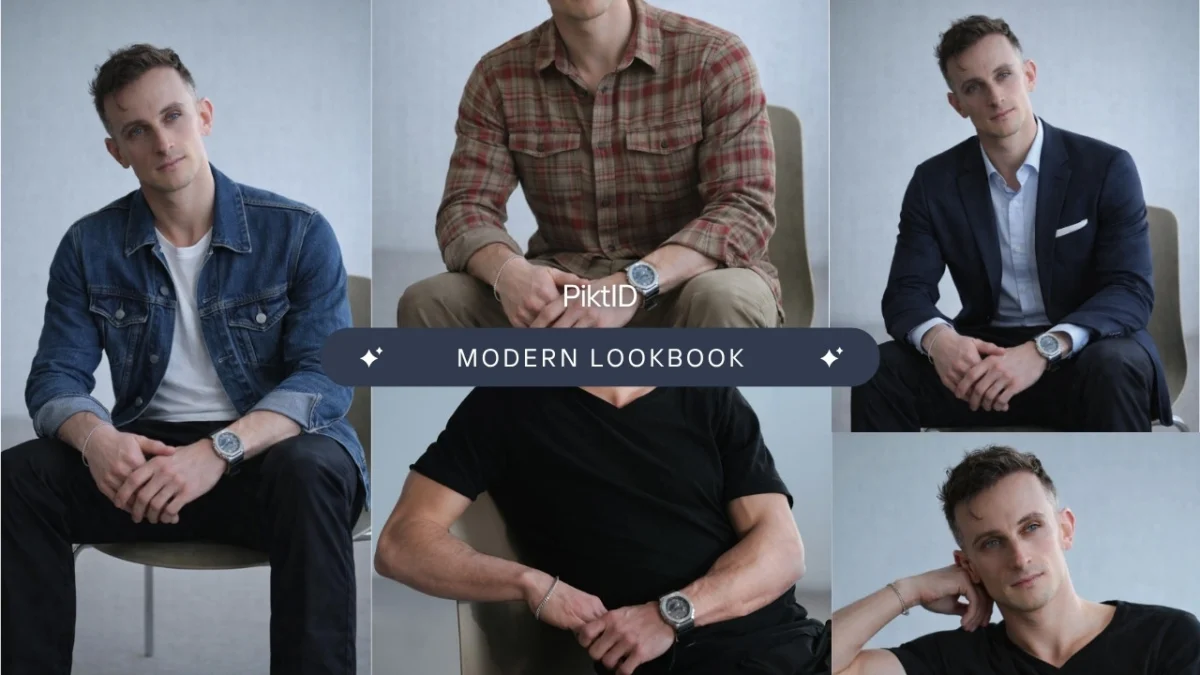
Temps de lecture estimé : 15 minutes
1. Le passage aux visuels évolutifs
Retouche photo de mode L'imagerie n'est plus une simple formalité de post-production ; elle est le moteur de la croissance du commerce de détail moderne. Dans un marché où le numérique prime, les images haute fidélité sont le principal facteur de confiance et de conversion des consommateurs.
Alors que la retouche traditionnelle se concentrait sur la suppression manuelle des imperfections, les normes de l'industrie en 2026 exigent cohérence visuelle à l'échelle. Un éclairage incohérent ou des détails de vêtements “ hallucinés ” dans des retouches de mauvaise qualité entraînent des taux de retour élevés et une dégradation de l'image de marque. C'est là que des plateformes professionnelles comme PiktID redéfinir le flux de travail.
En tirant parti PiktID Grâce à la retouche photo de mode avancée basée sur l'IA, les marques peuvent s'affranchir des contraintes du travail manuel. Qu'il s'agisse d'automatiser le détourage ou d'utiliser “ Échange de mode ” de PiktID” Pour rafraîchir l'image des mannequins sans avoir à refaire les photos, l'objectif est clair : une qualité éditoriale à la vitesse du e-commerce.
Ce guide explore :
- L'évolution de Retouche photo de mode professionnelle.
- Tâches d'édition critiques : des mannequins fantômes aux Contrôle d'identité de PiktID.
- IA contre manuel : Pourquoi PiktID est la référence en matière d'évolutivité.
- Cas d'utilisation axés sur le retour sur investissement pour les marques de mode mondiales.
2. Qu'est-ce que la retouche photo de mode ?

a. Définition et portée stratégique
D'un point de vue commercial, Retouche photo de mode Il s'agit du perfectionnement stratégique des images de mannequins et de vêtements afin de répondre aux normes rigoureuses de la marque. C'est un processus à plusieurs niveaux qui garantit que les produits ont une apparence attrayante tout en restant fidèles au vêtement physique.
Contrairement aux filtres photo de base, la retouche photo professionnelle implique :
- Retouche de précision : Amélioration non destructive de la peau et des tissus.
- Gestion des identités : Utilisation PiktID maintenir un modèle cohérent de “ jumeaux numériques ” dans l’ensemble des catalogues saisonniers.
- Correction de la chrominance et de l'éclairage : Garantir la précision des couleurs (essentiel pour réduire les retours pour “ Produit non conforme à la description ”).
- Composition de la scène : Intégration harmonieuse des mannequins dans des environnements éditoriaux haut de gamme grâce à l'IA.
b. Pourquoi c’est important en 2026 : L’économie de la “ confiance visuelle ”
La mode est un secteur où le visuel prime, où le temps nécessaire pour “ faire défiler et acheter ” est inférieur à trois secondes. Retouche photo de mode agit comme un vendeur silencieux pour votre marque.
- Conformité de la plateforme : Un traitement éditorial de haute qualité garantit que les images répondent aux exigences strictes des plateformes de vente en ligne comme Amazon, Myntra et Shopify.
- Sécurité de l'identité : Avec PiktID, Les marques peuvent ainsi générer des identités de mannequins synthétiques et sécurisées, évitant les obstacles juridiques et logistiques des licences de mannequins traditionnelles.
- Taux de retour réduits : Une représentation fidèle du tissu – un atout majeur de PiktID moteur — garantit que les clients reçoivent exactement ce qu'ils voient à l'écran.
c. Cas d'utilisation à fort impact pour l'édition de mode
Flux de travail de montage modernes optimisés par PiktID sont essentiels à chaque point de contact numérique :
- Pages de détail des produits (PDP) pour le commerce électronique : Transformer les photos à plat en clichés de mannequins à fort taux de conversion.
- Localisation globale : En utilisant PiktID adapter instantanément les modèles ethniques et les styles aux différents marchés régionaux.
- Commerce social : Création de contenu “ lifestyle ” à partir de photos de studio pour alimenter les flux Instagram et TikTok.
- Tests A/B : Changer rapidement les expressions ou les arrière-plans des modèles via PiktID pour voir quelle version génère les taux de clics (CTR) les plus élevés.
3. Les tâches courantes de retouche photo de mode dont les marques ont besoin aujourd'hui

La retouche photo dans la mode moderne va bien au-delà de la simple retouche. Les marques ont aujourd'hui besoin de retouches rapides et reproductibles, applicables à des centaines, voire des milliers d'images, tout en conservant un rendu haut de gamme et professionnel. Voici les tâches de retouche les plus courantes effectuées quotidiennement par les équipes de mode.
a. Nettoyage et remplacement de l'arrière-plan
L'arrière-plan joue un rôle majeur dans l'impression de professionnalisme que dégage une image de mode. Même de petits détails perturbateurs peuvent nuire à la qualité perçue.
La retouche photo de mode comprend généralement :
- Suppression des objets indésirables, des plis ou des ombres
- Nettoyage des fonds de studio irréguliers
- Remplacer les fonds unis par des scènes de style de vie ou éditoriales
Cela permet aux marques de réutiliser les mêmes images de produits sur leurs sites web, campagnes et plateformes de vente sans avoir à refaire les prises de vue.
b. Corrections d'éclairage et de couleur
Les variations d'éclairage constituent l'un des plus grands défis de la retouche photo de mode, en particulier pour les catalogues importants.
Les corrections typiques comprennent :
- Correction d'un éclairage inégal ou plat
- Équilibrer les ombres et les lumières pour créer de la profondeur
- S'assurer que les couleurs des tissus correspondent aux produits réels
Un éclairage précis et une homogénéité des couleurs améliorent la confiance des acheteurs et réduisent les retours de produits, notamment dans le commerce électronique.

c. Ajustements de pose et de composition
Une seule séance photo doit souvent être adaptée à plusieurs formats et canaux.
La retouche photo de mode permet de :
- Créer des variations de pose subtiles à partir d'une seule image
- Améliorer la posture et l'alignement corporel
- Ajustement du cadrage des bannières, des vignettes et des listes
L'essentiel est de préserver le réalisme pour que le modèle paraisse naturel et non modifié numériquement.
d. Modifications des expressions faciales et du regard
De petits changements faciaux peuvent avoir un impact significatif sur le rendu d'une image.
Les marques utilisent la retouche photo de mode pour :
- Adoucir ou neutraliser les expressions fortes
- Adaptez le contact visuel pour les catalogues ou les publicités
- Créez des looks avenants, assurés ou prêts pour la presse.
Ces modifications sont particulièrement utiles lorsque la même image est utilisée dans différents contextes marketing.
e. Changements d'identité du modèle
La mise à jour des identités des mannequins devient un élément essentiel des flux de travail modernes de retouche photo de mode.
Les cas d'utilisation courants comprennent :
- Mise à jour des visages des mannequins sans refaire les photos de vêtements
- Conserver la même identité à travers des collections entières
- Adapter les visuels aux différentes régions ou aux différents publics
Cela permet aux marques de rester flexibles tout en maintenant la cohérence et en réduisant les coûts de production.
4. Limites de la retouche manuelle de photos de mode

Si la retouche traditionnelle est la norme dans le secteur depuis des années, elle peine à suivre le rythme des exigences actuelles en matière d'échelle et de rapidité.
a. Défis liés au temps et aux coûts
La retouche manuelle de photos de mode est lente et coûteuse.
Les marques sont souvent confrontées à :
- Heures de travail par image
- Coûts élevés pour les retoucheurs professionnels
- Retards lors des lancements de produits et des campagnes
À mesure que les catalogues s'étoffent, ces coûts se multiplient rapidement.
b. Incohérence à l'échelle
Même les monteurs les plus expérimentés obtiennent des résultats différents.
La retouche manuelle de photos de mode conduit souvent à :
- Variations d'éclairage et de teint
- Couleurs de tissu incohérentes
- Qualité inégale selon les gammes de produits
Maintenir une identité visuelle unifiée devient de plus en plus difficile à mesure que le volume augmente.
c. Non conçu pour la vitesse ou l'itération
Les marques de mode doivent tester et s'adapter rapidement.
Les flux de travail manuels rendent difficile :
- Tester plusieurs variations de modèle ou de pose
- Réagissez rapidement aux tendances du marché
- Mettre à jour les visuels en fonction des changements saisonniers ou régionaux
Cela rend la retouche photo de mode traditionnelle inadaptée aux marques de commerce électronique et aux marques privilégiant le numérique, qui évoluent rapidement.
5. Pourquoi l'IA transforme la retouche photo de mode

L'adoption de l'IA a profondément transformé la retouche photo dans le secteur de la mode. Ce qui nécessitait autrefois des heures de retouche manuelle peut désormais être réalisé en quelques minutes, sans compromis sur la qualité visuelle. Pour les marques de mode et les équipes créatives actuelles, rapidité et cohérence ne sont plus une option : elles sont devenues indispensables.
a. Rapidité sans sacrifier la qualité
La retouche photo de mode assistée par l'IA permet aux équipes de traiter rapidement de grands ensembles d'images tout en préservant les normes éditoriales.
- Modifiez des dizaines de photos de mode en quelques minutes au lieu de plusieurs heures.
- Éliminer les tâches manuelles répétitives telles que le masquage, la retouche et la correction des couleurs
- Maintenir automatiquement des textures nettes, un éclairage précis et des contours précis.
Cette rapidité permet des lancements de campagne plus rapides et des cycles de production plus courts.
b. Cohérence de l'ensemble des collections
Maintenir une cohérence visuelle est l'un des plus grands défis de la retouche photo de mode, en particulier pour les collections saisonnières.
- Éclairage et tons de couleur uniformes sur toutes les images
- Structure faciale et texture de peau homogènes pour les photos de mannequin
- Des résultats fiables même lorsque les images proviennent de prises de vue différentes.
L'IA garantit que chaque image est conforme aux directives de la marque, quels que soient la date et le lieu de la prise de vue.

c. Évolutif pour les marques en croissance
À mesure que les marques se développent, le volume d'images augmente. La retouche manuelle des photos de mode n'est pas une solution efficace à grande échelle.
- Fonctionne aussi bien pour 10 images que pour 10 000 images
- Idéal pour les catalogues de commerce électronique, les agences et les grandes places de marché.
- Réduit la dépendance aux grandes équipes de retouche
Cette évolutivité fait de l'IA un choix judicieux aussi bien pour les marques émergentes que pour les grandes entreprises.
d. L'IA comme partenaire créatif
Au-delà de l'efficacité, l'IA améliore la flexibilité créative dans la retouche photo de mode.
- Permet d'expérimenter rapidement différents looks et styles
- Favorise une prise de décision plus rapide pour les équipes créatives
- Réduit le besoin de coûteux reshoots lorsque des corrections sont nécessaires.
Au lieu de limiter la créativité, l'IA supprime les contraintes de production.
6. Présentation de Fashion Swap : une nouvelle approche de la retouche photo de mode

L'une des avancées les plus marquantes en matière de retouche photo de mode est le Fashion Swap. Cette fonctionnalité permet aux marques de modifier ou de remplacer l'identité des mannequins tout en conservant le reste de l'image intact.
a. Qu'est-ce que Fashion Swap ?
Fashion Swap est une fonctionnalité basée sur l'IA qui modifie le visage du mannequin sur une photo de mode tout en préservant la structure visuelle originale.
- Les vêtements d'origine restent inchangés.
- La pose et le positionnement du corps restent intacts
- L'éclairage, les ombres et l'arrière-plan sont préservés.
Cela permet de rafraîchir les visuels sans avoir à refaire les photos des vêtements ni à retravailler l'image entière.
b. Comment Fashion Swap s'intègre à la retouche photo de mode
Fashion Swap résout un problème de production courant : la nécessité de mettre à jour l’apparence des mannequins sans perturber le style ni la composition.
- Mise à jour des visages des mannequins sans refaire les photos des vêtements
- Conservez exactement le même style, les détails du tissu et la coupe.
- Maintenir un rendu réaliste et une qualité visuelle éditoriale
Il s'intègre parfaitement aux flux de travail existants en matière de retouche photo de mode.
c. Principales fonctionnalités de Fashion Swap
Fashion Swap est conçu pour des résultats de qualité professionnelle, et non pour des retouches occasionnelles.
- Un maquillage naturel qui s'harmonise avec la lumière et l'angle.
- Intégration précise du teint pour des résultats réalistes
- Ligne capillaire et alignement de la mâchoire nets, sans artefacts visibles.
- Réalise des shootings de mode en studio, lifestyle et en extérieur.
Ces fonctionnalités permettent aux équipes de retouche photo de mode de maintenir des normes élevées tout en gagnant en flexibilité et en rapidité.
S'inscrire pour 10 crédits gratuits sur Studio PiktID
7. Étape par étape : Flux de travail de retouche photo de mode utilisant l’IA
Les flux de travail modernes de retouche photo de mode, basés sur l'IA, sont conçus pour être simples, rapides et homogènes. Au lieu de jongler entre plusieurs outils ou de recourir à la retouche manuelle, l'IA permet aux marques d'effectuer des retouches professionnelles de manière structurée.
Étape 1 : Téléchargez votre image de mode
Commencez par télécharger l'image que vous souhaitez modifier. La retouche photo de mode basée sur l'IA prend en charge aussi bien la photographie de studio que la photographie lifestyle.
Vous pouvez travailler avec :
- images de produits individuels
- Photos de tenues complètes ou de lookbook
- Photos de mannequins pour des campagnes publicitaires ou du e-commerce
Les images haute résolution produisent les résultats les plus précis, notamment pour le rendu des textures de tissus et des détails du visage.
Étape 2 : Appliquer un nettoyage ou un remplacement de l’arrière-plan
Le nettoyage de l'arrière-plan est l'une des tâches les plus courantes en retouche photo de mode. L'IA peut rapidement supprimer les éléments perturbateurs et créer des arrière-plans nets et professionnels.
Les modifications d'arrière-plan courantes comprennent :
- Suppression des objets ou ombres indésirables
- Nettoyage des fonds de studio irréguliers
- Remplacer les arrière-plans par des décors de marque ou de style de vie
Cette étape permet de maintenir l'attention sur le vêtement et le mannequin, ce qui améliore la clarté visuelle et les taux de conversion.
Étape 3 : Corriger l’éclairage et l’équilibre des couleurs
Les variations d'éclairage peuvent donner aux vêtements un aspect peu flatteur ou peu réaliste. La retouche photo de mode par IA corrige automatiquement ces problèmes.
À ce stade, le système :
- Normalise l'exposition et le contraste
- Équilibre les teintes de peau et les couleurs des tissus
- Améliore les détails de texture sans retouche excessive
Cela permet de garantir que les vêtements aient une apparence uniforme sur différentes photos et appareils.
Étape 4 : Ajuster la pose ou l’expression
De subtiles modifications de la pose et de l'expression peuvent considérablement améliorer l'impact d'une image de mode. L'IA permet des retouches précises sans donner à l'image un aspect artificiel.
Il s'agit notamment de
- Corrections mineures de posture
- adoucissement ou raffinement de l'expression
- Alignement du regard pour une utilisation dans un catalogue ou à des fins éditoriales
Ces ajustements permettent de créer des visuels soignés, à la fois naturels et professionnels.
Étape 5 : Utiliser Fashion Swap (si nécessaire)
Le Fashion Swap est utilisé lorsqu'une marque a besoin de modifier ou d'uniformiser l'identité de son mannequin sans avoir à refaire les photos de la tenue.
Cette étape est utile lorsque :
- Mise à jour des visages des modèles dans une collection
- Maintenir une identité visuelle cohérente entre les campagnes
- Adapter les visuels aux différentes régions ou marchés
La retouche photo de mode, combinée à l'échange de vêtements, permet aux marques de réutiliser les mêmes images de vêtements tout en mettant à jour l'identité du mannequin de manière transparente.
Étape 6 : Améliorations finales et exportation
La dernière étape prépare l'image à une utilisation concrète. L'IA garantit que le résultat répond aux normes professionnelles.
Les résultats finaux sont :
- Haute résolution
- Optimisé pour le web, la publicité et l'impression
- Prêt pour les plateformes de commerce électronique, les médias sociaux ou les campagnes marketing
Cela complète le flux de travail de retouche photo de mode avec un minimum d'effort manuel.
8. Cas d'utilisation de la retouche photo de mode

La retouche photo de mode assistée par l'IA est utilisée dans tout l'écosystème de la mode. Voici les cas d'utilisation professionnels les plus courants.
a. Marques et créateurs de mode
Les marques font appel à la retouche photo de mode pour créer des collections visuellement cohérentes et des supports narratifs.
Les applications courantes comprennent :
- catalogues saisonniers
- Visuels de la campagne
- Narration de marque de style éditorial
L'IA aide les concepteurs à travailler plus vite tout en préservant leur intention créative.
b. Commerce électronique et boutiques DTC
Pour les boutiques en ligne, la retouche photo de mode a un impact direct sur les taux de conversion et la confiance envers les produits.
Les principaux cas d'utilisation sont les suivants :
- Optimisation des fiches produits
- Tests de performances pour différents modèles visuels
- Mises à jour rapides des grands catalogues
L'IA permet aux marques de maintenir une cohérence visuelle sur des centaines de références.
c. Équipes marketing et créatives
Les équipes marketing utilisent la retouche photo de mode pour générer de multiples variations créatives sans avoir à refaire les prises de vue.
Cela prend en charge :
- créatifs des médias sociaux
- visuels publicitaires payants
- Adaptations spécifiques au marché pour les campagnes mondiales
La rapidité et la flexibilité sont des atouts essentiels dans ce contexte.
d. Photographes et studios
Les photographes utilisent la retouche photo de mode pour valoriser leurs séances photo existantes.
Les utilisations typiques comprennent :
- Révisions demandées par le client
- Reshoots virtuels
- Amélioration et mise à jour du portefeuille
Les outils d'IA réduisent les délais de traitement tout en maintenant une qualité professionnelle.
9. Retouche photo de mode par IA vs retouche manuelle
La retouche photo s'est traditionnellement appuyée sur des outils manuels tels que Photoshop et Lightroom. Bien que ces méthodes conservent leur utilité, elles peinent à répondre aux exigences de rapidité, d'échelle et de cohérence des marques de mode actuelles. La retouche photo basée sur l'IA propose une approche fondamentalement différente en automatisant les ajustements complexes tout en préservant le réalisme visuel.
Aperçu comparatif
| Critères | Retouche photo de mode par IA | Retouche manuelle |
| Vitesse | Modifications effectuées en quelques minutes | Heures ou jours par image |
| Coût | Coût à long terme inférieur | coûts de main-d'œuvre élevés et continus |
| Cohérence | Résultats uniformes dans tous les catalogues | Les résultats varient selon l'éditeur |
| Évolutivité | Gère des centaines ou des milliers d'images | limité par les capacités humaines |
| Flexibilité créative | Variantes et tests faciles | Les changements nécessitent une nouvelle révision |
| Temps de révision | Mises à jour instantanées | cycles de révision lents |
Principales différences expliquées
i. Vitesse
La retouche photo par IA peut traiter de grands lots d'images en quelques minutes. La retouche manuelle exige une attention individuelle pour chaque image, ce qui ralentit les lancements et les mises à jour.
ii. Coût
Les flux de travail manuels reposent sur des éditeurs qualifiés, ce qui augmente les coûts à long terme. L'IA réduit la dépendance au travail manuel tout en maintenant une qualité professionnelle.
iii. Cohérence
L'IA applique la même logique visuelle à toutes les images, garantissant ainsi un éclairage, un teint et un style homogènes. La retouche manuelle entraîne souvent de petites différences, mais perceptibles, au sein d'une même collection.
iv. Évolutivité
La retouche photo de mode par IA s'adapte sans effort, de quelques images à des catalogues saisonniers complets. Les méthodes manuelles sont limitées par le temps et les ressources disponibles.
v. Temps de révision
L'IA permet des expérimentations et des mises à jour rapides. Les révisions manuelles nécessitent la réouverture des fichiers, leur réédition et des approbations supplémentaires.
Pourquoi l'IA s'intègre aux flux de travail modernes de la mode
La retouche photo basée sur l'IA est :
- Des délais de production plus courts
- Plus cohérent d'une campagne à l'autre
- Plus facile à adapter à mesure que les catalogues s'étoffent
- Mieux aligné sur le commerce électronique et les marques axées sur le numérique
10. Meilleures pratiques pour la retouche photo professionnelle de mode

Même les outils d'IA les plus performants donnent les meilleurs résultats lorsqu'ils sont associés à des sources de qualité. Le respect de quelques bonnes pratiques garantit des résultats de montage de haute qualité.
a. Commencez par des images haute résolution
Les images haute résolution offrent davantage de détails pour l'analyse par l'IA. Des textures nettes, des contours précis et des données de couleur exactes permettent d'obtenir de meilleurs résultats en matière de retouche.
b. Utilisez un éclairage constant pendant les prises de vue.
Un éclairage uniforme réduit le besoin de corrections importantes. Il aide également l'IA à préserver le réalisme lors de l'application de tâches de retouche photo telles que la correction des tons ou la modification de l'identité du modèle.
c. Évitez les angles extrêmes
Les angles extrêmes de la tête ou du corps rendent plus difficile le maintien de proportions naturelles. Les poses droites ou légèrement inclinées donnent les meilleurs résultats en retouche.
d. Veillez à ce que les modifications soient subtiles.
En photographie de mode professionnelle, le réalisme est primordial. De subtils ajustements de l'éclairage, des expressions ou de l'arrière-plan permettent d'obtenir des résultats plus nets que des retouches plus importantes.
e. Respecter les directives de la marque
Définir des normes visuelles claires pour :
- Ton de couleur
- Ambiance et style
- Esthétique de fond
- Présentation du modèle
L'application systématique de ces directives permet de garantir que la retouche photo soutient l'identité de marque au lieu de la diluer.
11. Éthique, authenticité et édition responsable

Le montage joue un rôle crucial dans la perception des marques. À mesure que les outils d'IA se perfectionnent, il est important que les marques les utilisent de manière responsable et transparente.
a. Transparence des visuels marketing
La mode doit sublimer les images sans induire les clients en erreur. Les visuels retouchés doivent refléter fidèlement le produit, sa coupe et la qualité du tissu. Lorsque l'IA est utilisée pour optimiser l'éclairage, les expressions ou les arrière-plans, l'image finale doit offrir une expérience client réaliste, sans exagération ni artifice.
b. Éviter les représentations trompeuses
Un excès de retouche peut nuire à la confiance. Des modifications corporelles excessives, des textures de peau irréalistes ou des proportions altérées peuvent créer de fausses attentes. Une retouche responsable privilégie la clarté, la cohérence et la qualité, et non la déformation.
c. Utiliser des identités synthétiques ou sous licence lors de l'échange de modèles
Lors du changement d'identité de mannequins, les marques doivent privilégier les visages synthétiques ou sous licence. Cela garantit le respect des lois sur la protection de la vie privée et évite toute utilisation non autorisée de l'image personnelle. Les processus de production de mode compatibles avec les identités synthétiques permettent aux marques de diffuser du contenu à grande échelle tout en restant conformes aux exigences légales et éthiques.
d. Maintenir une confiance durable avec les publics
La confiance se construit par la cohérence. Lorsque les clients constatent une qualité visuelle identique sur l'ensemble des campagnes et des plateformes, ils l'associent au professionnalisme et à la fiabilité. La retouche photo éthique dans le domaine de la mode aide les marques à bâtir leur crédibilité plutôt qu'à rechercher une notoriété éphémère.
12. Conclusion
La retouche photo de mode n'est plus une option pour les marques qui évoluent sur les marchés numériques modernes. Des visuels de haute qualité influencent la confiance, les taux de conversion et la perception de la marque sur les plateformes e-commerce et les canaux marketing.
L'IA a révolutionné la retouche photo en la rendant plus rapide, plus homogène et plus facile à adapter à grande échelle. Au lieu de recourir à des retouches manuelles fastidieuses, les marques peuvent désormais affiner leurs images, ajuster les expressions, mettre à jour leurs modèles et garantir une cohérence visuelle avec un minimum d'effort.
Fashion Swap optimise encore davantage ce flux de travail en permettant aux marques de changer l'identité des mannequins sans avoir à refaire les prises de vue. Cette flexibilité aide les équipes à adapter rapidement leurs campagnes, à tester de nouvelles pistes créatives et à maintenir une image de marque cohérente au fil des régions et des saisons.
Pour les marques qui cherchent à moderniser leur processus créatif, l'adoption de la retouche photo basée sur l'IA est une décision stratégique qui offre rapidité, qualité et contrôle.
Qu'est-ce qui fait de PiktID l'outil idéal pour la retouche photo ?
- La retouche photo dans le secteur de la mode est essentielle pour le commerce de détail moderne ; elle permet d’améliorer les visuels afin de renforcer la confiance des consommateurs et d’augmenter les taux de conversion.
- Les logiciels de retouche photo de mode basés sur l'IA, comme PiktID, offrent rapidité et cohérence, permettant aux marques de gérer efficacement de grands volumes d'images.
- Fashion Swap permet aux marques de mettre à jour l'identité de leurs mannequins sans avoir à refaire les prises de vue, préservant ainsi l'intégrité visuelle des campagnes.
- Cet article aborde les meilleures pratiques en matière de retouche photo de mode et souligne l'importance d'utiliser des images de haute qualité et de respecter les normes éthiques.
- Les outils d'IA révolutionnent la retouche photo de mode, la rendant plus rapide et plus évolutive, tout en garantissant une qualité professionnelle.
Envie de sublimer vos visuels de mode ? Essayez la retouche photo professionnelle avec IA et transformez vos images sans avoir à les refaire. Créez dès aujourd’hui des visuels éditoriaux haut de gamme.
13. FAQ - Retouche photo de mode
i. Qu'est-ce que la retouche photo de mode ?
La retouche photo de mode consiste à améliorer les images de mode pour les rendre utilisables à des fins commerciales. Cela inclut l'optimisation de l'éclairage, la correction des couleurs, le traitement des arrière-plans, l'ajustement des expressions et la garantie d'un rendu fidèle et attrayant des vêtements. Cette technique est couramment utilisée pour le e-commerce, les lookbooks, les campagnes publicitaires et les réseaux sociaux.
ii. Comment l'IA améliore-t-elle la retouche photo de mode ?
L'IA améliore le montage en automatisant les tâches répétitives et en garantissant des résultats homogènes. Elle peut corriger l'éclairage, uniformiser les tons, actualiser les expressions des modèles et intervertir les identités en quelques minutes. Cela réduit l'effort manuel tout en préservant une qualité visuelle élevée, même pour de vastes collections.
iii. La retouche photo par IA est-elle adaptée aux marques de luxe ?
Oui. Les marques de luxe utilisent l'IA pour garantir des standards visuels stricts dans leurs campagnes internationales. L'IA contribue à préserver la cohérence tout en permettant aux équipes créatives de contrôler le style, le ton et la présentation à grande échelle.
iv. Puis-je retoucher des photos de mode sans Photoshop ?
Oui. Les outils modernes permettent aux marques de retoucher leurs images sans logiciels traditionnels. Les plateformes basées sur l'IA gèrent la retouche, le nettoyage de l'arrière-plan, les corrections d'éclairage et la mise à jour des modèles grâce à des flux de travail simplifiés, rendant ainsi la retouche professionnelle plus accessible.
v. Comment fonctionne Fashion Swap pour les changements de modèles ?
Fashion Swap permet aux marques de remplacer le visage d'un mannequin tout en conservant ses vêtements, sa pose, son éclairage et son arrière-plan d'origine. Ce système accélère le montage en éliminant les séances photo supplémentaires lors de la mise à jour des campagnes ou de l'adaptation des visuels à différents marchés.
vi. La retouche photo de mode par IA est-elle légale pour un usage commercial ?
La retouche par IA est légale lorsque les images appartiennent à la marque, font l'objet d'une licence ou ont été créées à l'aide d'identités synthétiques. Les marques doivent s'assurer de détenir les droits sur toutes les images utilisées et éviter d'utiliser des identités réelles sans consentement.
vii. L'IA peut-elle remplacer complètement la retouche manuelle ?
L'IA peut gérer la plupart des tâches de retouche, notamment les corrections d'éclairage, les modifications d'expressions, le nettoyage de l'arrière-plan et le remplacement de modèles. La retouche manuelle peut encore être utilisée pour des modifications très artistiques ou complexes, mais l'IA en réduit considérablement le recours dans les flux de travail quotidiens.
viii. Quels types de photos de mode se prêtent le mieux à la retouche par IA ?
La retouche photo de mode donne de meilleurs résultats avec des images haute résolution, un éclairage uniforme et une bonne visibilité des vêtements et des visages. Les photos de studio et de style de vie conviennent toutes deux, pourvu que la qualité de l'image originale soit bonne.
Liens connexes
- Retouche faciale simplifiée : obtenez les meilleures expressions
- Comment créer un influenceur IA
- Technologie de la mode IA : Concevez les meilleures et les dernières tendances
- L'IA dans l'industrie de la mode : Créer facilement des photos à la mode
- AI Fashion Photography Guide - Créez des images de mode haut de gamme avec l'IA